
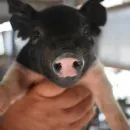
 Cherkizovo Group (MOEX: GCHE), the largest vertically integrated meat producer inRussia, isplanning toinvest RUB8.5bninnew pig farms inthe Tambov Region. The project will enable the Company toincrease its annual pork capacity bymore than 45,000tonnes ofmeat. Cherkizovo also intends toinvest more than RUB4bninramping upthe local feed mill.
Maxim Yegorov, Acting Head ofthe Tambov Region Administration, held aworking meeting with Sergey Mikhailov, CEO ofCherkizovo Group, onFriday. They discussed the Company’sfurther development inthe region, including aproject tocreate new modern pig farms inthe Pervomaysky District. Cherkizovo isplanning tobuild four finisher.
Read more...
Cherkizovo Group (MOEX: GCHE), the largest vertically integrated meat producer inRussia, isplanning toinvest RUB8.5bninnew pig farms inthe Tambov Region. The project will enable the Company toincrease its annual pork capacity bymore than 45,000tonnes ofmeat. Cherkizovo also intends toinvest more than RUB4bninramping upthe local feed mill.
Maxim Yegorov, Acting Head ofthe Tambov Region Administration, held aworking meeting with Sergey Mikhailov, CEO ofCherkizovo Group, onFriday. They discussed the Company’sfurther development inthe region, including aproject tocreate new modern pig farms inthe Pervomaysky District. Cherkizovo isplanning tobuild four finisher.
Read more...
 Cherkizovo Group, the largest vertically integrated meat producer inRussia, has given the State Veterinary Service ofthe Belgorod Region equipment todisinfect poultry andanimal farming facilities. The equipment can help prevent outbreaks ofAfrican swine fever (ASF) andavian influenza.
Representatives ofthe Group handed over Aist— 2m, amobile disinfection unit with agas turbine module, tothe Belgorod Region’sveterinary department. Worth over RUB5m, the unit can beused toeffectively disinfect buildings where poultry andanimals are held andsupports humidification, airing, drying andheating. Itwas delivered toananimal health center inStary.
Read more...
Cherkizovo Group, the largest vertically integrated meat producer inRussia, has given the State Veterinary Service ofthe Belgorod Region equipment todisinfect poultry andanimal farming facilities. The equipment can help prevent outbreaks ofAfrican swine fever (ASF) andavian influenza.
Representatives ofthe Group handed over Aist— 2m, amobile disinfection unit with agas turbine module, tothe Belgorod Region’sveterinary department. Worth over RUB5m, the unit can beused toeffectively disinfect buildings where poultry andanimals are held andsupports humidification, airing, drying andheating. Itwas delivered toananimal health center inStary.
Read more...
 At the end of 2021, total retail and commercial sales of veterinary drugs in Russia (excluding online sales) amounted to 21.1 billion rubles. The sales increase reached 4 per cent compared to 2020, according to the report compiled by the analytical company RNC Pharma (available at the Veterinary Medicine and Life).
“This is a very good result compared to the sales decrease in 2020 which amounted -0.3 per cent. Although, unfortunately, we have to announce that this result is inflation-linked,” the analysts explained.
At the same time, in 2021, sales of animal drugs fell by 7.2 per cent in volume compared to 2020. It is clarified that the calculations were.
Read more...
At the end of 2021, total retail and commercial sales of veterinary drugs in Russia (excluding online sales) amounted to 21.1 billion rubles. The sales increase reached 4 per cent compared to 2020, according to the report compiled by the analytical company RNC Pharma (available at the Veterinary Medicine and Life).
“This is a very good result compared to the sales decrease in 2020 which amounted -0.3 per cent. Although, unfortunately, we have to announce that this result is inflation-linked,” the analysts explained.
At the same time, in 2021, sales of animal drugs fell by 7.2 per cent in volume compared to 2020. It is clarified that the calculations were.
Read more...
Most people eat meat and dairy with little thought of the consequences. Yet those consequences are planetary in scale. Raising livestock for meat, eggs and milk accounts for roughly 14% of all man-made greenhouse gas emissions. Beef production is the biggest driver of forest loss within agriculture. The meat industry has been linked to a host of other environmental harms, including water pollution. Eating too much meat can be bad for your health too, particularly red and processed meat which is thought to increase your risk of developing colorectal cancer. Feeding the world’s appetite for meat costs the lives of billions of animals a year, and animal welfare is. Read more...
 Recent developments in liquid/solids separation for the processing of poultry, pork and red meat have opened the door to more streamlined water reclamation processes that support sustainability.
For meat and poultry processors, water consumption, water reclamation and wastewater treatment are key functions of plant operations. Meat processing — and poultry processing in particular — are activities that involve high water usage. For every gallon purchased, the processing plant pays to eliminate fats and proteins from that water. An average size plant can easily end up with 1,000,000 to 2,000,000 gallons of water daily that is laden with proteins and fats.
Read more...
Recent developments in liquid/solids separation for the processing of poultry, pork and red meat have opened the door to more streamlined water reclamation processes that support sustainability.
For meat and poultry processors, water consumption, water reclamation and wastewater treatment are key functions of plant operations. Meat processing — and poultry processing in particular — are activities that involve high water usage. For every gallon purchased, the processing plant pays to eliminate fats and proteins from that water. An average size plant can easily end up with 1,000,000 to 2,000,000 gallons of water daily that is laden with proteins and fats.
Read more...
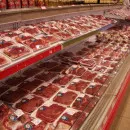 The Ministry of Agriculture of Russia has introduced a draft aiming to amend the technical regulation of the Customs Union "On Meat and Meat Products Safety" (TR TS 034/2013) in regards to the labeling policy of meat products. The document was published for public discussion in the regulations section on the ministry’s website.
The draft will set out maximum allowable deviations in the content of proteins, fats and carbohydrates, as well as in energy content of meat products, including baby food to be indicated on the label. Permitted deviations should be set out depending on mixed content of meat products and possible differences in test results,.
Read more...
The Ministry of Agriculture of Russia has introduced a draft aiming to amend the technical regulation of the Customs Union "On Meat and Meat Products Safety" (TR TS 034/2013) in regards to the labeling policy of meat products. The document was published for public discussion in the regulations section on the ministry’s website.
The draft will set out maximum allowable deviations in the content of proteins, fats and carbohydrates, as well as in energy content of meat products, including baby food to be indicated on the label. Permitted deviations should be set out depending on mixed content of meat products and possible differences in test results,.
Read more...
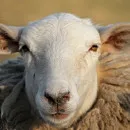 Sheep pox outbreak was registered in the Derbent region of Dagestan, according to the report compiled by the information and analytical center of Rosselkhoznadzor on February 1, 2022.The disease was confirmed on the private farm in the village of Dyuzler. There was a total of 1 thousand sheep in the herd on the affected farm, 82 of which died of the disease.
The authorities have started vaccination of the herd in response to the outbreak, the report said.
This is the first confirmed case of sheep pox in Russia in 2022.
According to Rosselkhoznadzor, in 2021, 13 cases of sheep pox and goat pox were registered in Russia. The outbreaks of the disease were.
Read more...
Sheep pox outbreak was registered in the Derbent region of Dagestan, according to the report compiled by the information and analytical center of Rosselkhoznadzor on February 1, 2022.The disease was confirmed on the private farm in the village of Dyuzler. There was a total of 1 thousand sheep in the herd on the affected farm, 82 of which died of the disease.
The authorities have started vaccination of the herd in response to the outbreak, the report said.
This is the first confirmed case of sheep pox in Russia in 2022.
According to Rosselkhoznadzor, in 2021, 13 cases of sheep pox and goat pox were registered in Russia. The outbreaks of the disease were.
Read more...
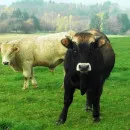 A new research and production center for the reproduction of farm animals has been established by the Kalmyk State University. A bank of frozen embryos from fertilized eggs gets underway this year in Kalmykia. The scientists will collect the material from specially selected bulls and cows to be stored in the bank, reports the Rossiyskaya Gazeta.
Kalmykia State University clarified that the project is being sponsored by the regional Ministry of Agriculture which allocated 30 million rubles.
As the research and production center told the Veterinary Medicine and Life, the main purpose of the project is to improve farm animals’ quality in Russia by improving the.
Read more...
A new research and production center for the reproduction of farm animals has been established by the Kalmyk State University. A bank of frozen embryos from fertilized eggs gets underway this year in Kalmykia. The scientists will collect the material from specially selected bulls and cows to be stored in the bank, reports the Rossiyskaya Gazeta.
Kalmykia State University clarified that the project is being sponsored by the regional Ministry of Agriculture which allocated 30 million rubles.
As the research and production center told the Veterinary Medicine and Life, the main purpose of the project is to improve farm animals’ quality in Russia by improving the.
Read more...
 In February 2022, it became known about the decision of the Ministry ofAgriculture of the Russian Federationto create in the country the Federal State Information and Analytical System of Breeding Resources (FGIAS PR), which will be provided by the owners of breeding animals.
In particular, the platform will contain information about each animal and its ancestors, data on breeding farms, on imported breeding products and regulatory and analytical information. Access to the resource will be free.
Ministry of Agriculture creates GIS for the development of breeding
At the same time, the procedure for submitting information to the system, their composition, as well.
Read more...
In February 2022, it became known about the decision of the Ministry ofAgriculture of the Russian Federationto create in the country the Federal State Information and Analytical System of Breeding Resources (FGIAS PR), which will be provided by the owners of breeding animals.
In particular, the platform will contain information about each animal and its ancestors, data on breeding farms, on imported breeding products and regulatory and analytical information. Access to the resource will be free.
Ministry of Agriculture creates GIS for the development of breeding
At the same time, the procedure for submitting information to the system, their composition, as well.
Read more...
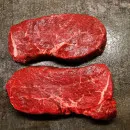 In 2021, 223 thousand tons of fresh and frozen meat were imported toRussia, which is 17.2% less than a year earlier. Such data were published on February 7, 2022 in the Federal Customs Service (FCS) oftheRussian Federation.
The volume of meat import into Russia from abroad in monetary terms by the end of 2021 fell by 6.3% and amounted to $893 million. Imports of fresh and frozenpoultry meat in 2021 increased by 5.8% compared to the previous year and reached 242.2 thousand tons, while in dollars the indicator increased by 28.6% to $411.6 million.
According to the results of 2021, imports of fresh and frozen fish grew by 9.9% in kind - to 433.6 thousand tons, and in.
Read more...
In 2021, 223 thousand tons of fresh and frozen meat were imported toRussia, which is 17.2% less than a year earlier. Such data were published on February 7, 2022 in the Federal Customs Service (FCS) oftheRussian Federation.
The volume of meat import into Russia from abroad in monetary terms by the end of 2021 fell by 6.3% and amounted to $893 million. Imports of fresh and frozenpoultry meat in 2021 increased by 5.8% compared to the previous year and reached 242.2 thousand tons, while in dollars the indicator increased by 28.6% to $411.6 million.
According to the results of 2021, imports of fresh and frozen fish grew by 9.9% in kind - to 433.6 thousand tons, and in.
Read more...
© Inline LLC 2015-2026. Privacy Policy | Terms of Service