
 The Russian agricultural sector expects a noticeable increase in product exports this year. Deputy Prime Minister Victoria Abramchenko predicts a 10 percent increase in exports, but exact figures have not yet been made public. However, the Ministry of Agriculture expects exports to exceed $45 billion. Russia actively exports grain, its processed products, oilseeds and fat-and-oil products, dairy and meat products.
It is interesting to note that Russia has moved from importing some products, such as meat, to exporting. This means that the country supplies these goods in larger quantities than it imports. This fact indicates the growth of production and competitiveness.
Read more...
The Russian agricultural sector expects a noticeable increase in product exports this year. Deputy Prime Minister Victoria Abramchenko predicts a 10 percent increase in exports, but exact figures have not yet been made public. However, the Ministry of Agriculture expects exports to exceed $45 billion. Russia actively exports grain, its processed products, oilseeds and fat-and-oil products, dairy and meat products.
It is interesting to note that Russia has moved from importing some products, such as meat, to exporting. This means that the country supplies these goods in larger quantities than it imports. This fact indicates the growth of production and competitiveness.
Read more...
 Based on the results of nine months of 2023, the agricultural production index amounted to 101.3%, as follows from Rosstat data. At the same time, a significant increase was recorded in September compared to the same month in 2022 - 12.7%. At the same time, the service previously noted negative dynamics in agricultural production: in August - 93.7%, in July - 97.1%. In January-September last year, the agricultural production index amounted to 111.7%.
The volume of agricultural production in September 2023 in current prices, according to preliminary estimates by Rosstat, reached 2.1 trillion rubles. During the period from January to September 2023, products worth.
Read more...
Based on the results of nine months of 2023, the agricultural production index amounted to 101.3%, as follows from Rosstat data. At the same time, a significant increase was recorded in September compared to the same month in 2022 - 12.7%. At the same time, the service previously noted negative dynamics in agricultural production: in August - 93.7%, in July - 97.1%. In January-September last year, the agricultural production index amounted to 111.7%.
The volume of agricultural production in September 2023 in current prices, according to preliminary estimates by Rosstat, reached 2.1 trillion rubles. During the period from January to September 2023, products worth.
Read more...
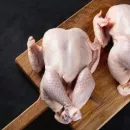 The Russian Ministry of Agriculture proposed to exempt importers of certain types of chicken from paying import customs duties for 2024 when supplying products up to 160 thousand tons. Interfax reports this with reference to a letter from the ministry with a corresponding proposal to the Ministry of Economic Development and the Ministry of Industry and Trade.
In the document, the Ministry of Agriculture asks to submit for consideration to the subcommittee on customs, tariff and non-tariff regulation, protective measures in foreign trade of the Government Commission for Economic Development and Integration the issues of establishing a temporary ban on the export of.
Read more...
The Russian Ministry of Agriculture proposed to exempt importers of certain types of chicken from paying import customs duties for 2024 when supplying products up to 160 thousand tons. Interfax reports this with reference to a letter from the ministry with a corresponding proposal to the Ministry of Economic Development and the Ministry of Industry and Trade.
In the document, the Ministry of Agriculture asks to submit for consideration to the subcommittee on customs, tariff and non-tariff regulation, protective measures in foreign trade of the Government Commission for Economic Development and Integration the issues of establishing a temporary ban on the export of.
Read more...
 In the Moscow region they showed a grown calf from a test tube cow. Information about this was published by the Izvestia Telegram channel.
Let us recall that at the end of December last year, the Federal Research Center for Animal Husbandry - VIZH named after Academician L. K. Ernst reported the receipt of the first offspring from a cloned cow named Tsvetochek, which gave birth to a healthy daughter weighing 40 kg. The newborn was given the name Decembrist.
Unlike her mother, the Decembrist was born in the traditional way, the report says.
This was a significant event, since the development of genome editing technology on the cloning platform can only be.
Read more...
In the Moscow region they showed a grown calf from a test tube cow. Information about this was published by the Izvestia Telegram channel.
Let us recall that at the end of December last year, the Federal Research Center for Animal Husbandry - VIZH named after Academician L. K. Ernst reported the receipt of the first offspring from a cloned cow named Tsvetochek, which gave birth to a healthy daughter weighing 40 kg. The newborn was given the name Decembrist.
Unlike her mother, the Decembrist was born in the traditional way, the report says.
This was a significant event, since the development of genome editing technology on the cloning platform can only be.
Read more...
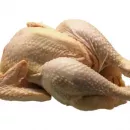 Russian broiler meat prices stay at the heights achieved after prices jumped 15-20% in May, which local analysts link with bird flu outbreaks in the country.
Since the beginning of 2023, Russian veterinary watchdog Rosselhoznadzor registered 45 outbreaks of highly pathogenic avian influenza, 7 of which were among farmed birds. This year, the virus was found in 24 Russian provinces, while in May, which was the worst month in terms of bird flu spread in the country this year, 14 provinces were hit.
On 20 May, an outbreak was reported at the Romanoskaya poultry farm in Yaroslavl oblast, forcing veterinary authorities to cull 800,000 broiler chickens.
Over the past 3.
Read more...
Russian broiler meat prices stay at the heights achieved after prices jumped 15-20% in May, which local analysts link with bird flu outbreaks in the country.
Since the beginning of 2023, Russian veterinary watchdog Rosselhoznadzor registered 45 outbreaks of highly pathogenic avian influenza, 7 of which were among farmed birds. This year, the virus was found in 24 Russian provinces, while in May, which was the worst month in terms of bird flu spread in the country this year, 14 provinces were hit.
On 20 May, an outbreak was reported at the Romanoskaya poultry farm in Yaroslavl oblast, forcing veterinary authorities to cull 800,000 broiler chickens.
Over the past 3.
Read more...
 Russian pork giant Miratorgand a Russian subsidiary ofthe Van Hessen Grouphave launched Geparinus factory in the Kursk region. The factory will produce the initial form of pharmaceutical heparin and hydrolysed feed protein.
With an investment cost of 1.6 billion roubles (US $16 million), Geparinus is the first high-tech project for pork mucosa processing in Russia, according to Miratorg. The company will process mucosa, which was previously exported to Europe, obtaining products with high added value.
Side product
The initial form of pharmaceutical heparin is used in manufacturing heparin, used as anticoagulants in surgery, in the treatment of pneumonia and as.
Read more...
Russian pork giant Miratorgand a Russian subsidiary ofthe Van Hessen Grouphave launched Geparinus factory in the Kursk region. The factory will produce the initial form of pharmaceutical heparin and hydrolysed feed protein.
With an investment cost of 1.6 billion roubles (US $16 million), Geparinus is the first high-tech project for pork mucosa processing in Russia, according to Miratorg. The company will process mucosa, which was previously exported to Europe, obtaining products with high added value.
Side product
The initial form of pharmaceutical heparin is used in manufacturing heparin, used as anticoagulants in surgery, in the treatment of pneumonia and as.
Read more...
 Russia’s leading meat unions have called on the authorities to control online pork sales, as a rise in turnover in this segment threatens to worsen the situation with African Swine Fever (ASF).
The Russian Union of pork producers and the Russian National Meat Association have sent a letter to the Russian Economy Development Ministry, stating the threat of the growing e-commerce niche of the meat market, where most available products are not subject to veterinary control.
Skyrocketing sales
The e-commerce segment of the Russian livestock industry is expanding. For instance, sales of live animals through the “My Farming” website, a platform.
Read more...
Russia’s leading meat unions have called on the authorities to control online pork sales, as a rise in turnover in this segment threatens to worsen the situation with African Swine Fever (ASF).
The Russian Union of pork producers and the Russian National Meat Association have sent a letter to the Russian Economy Development Ministry, stating the threat of the growing e-commerce niche of the meat market, where most available products are not subject to veterinary control.
Skyrocketing sales
The e-commerce segment of the Russian livestock industry is expanding. For instance, sales of live animals through the “My Farming” website, a platform.
Read more...
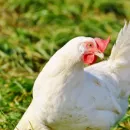 In the next 7 years, a quarter of Russian poultry meat in the country will be produced based on the domestic cross of Smena 9 chickens. This is a unique development of Russian breeders. The head of the Ministry of Agriculture, Dmitry Patrushev, told the president of the country about the prospects for the development of a breeding center for replicating the Smena 9 cross of chickens during a meeting with members of the government.
“By 2030, we will ensure that the share of poultry meat production based on domestic chicken crosses is at least 25%. And this will certainly increase the level of food security in our country,” said Dmitry Patrushev, his words are.
Read more...
In the next 7 years, a quarter of Russian poultry meat in the country will be produced based on the domestic cross of Smena 9 chickens. This is a unique development of Russian breeders. The head of the Ministry of Agriculture, Dmitry Patrushev, told the president of the country about the prospects for the development of a breeding center for replicating the Smena 9 cross of chickens during a meeting with members of the government.
“By 2030, we will ensure that the share of poultry meat production based on domestic chicken crosses is at least 25%. And this will certainly increase the level of food security in our country,” said Dmitry Patrushev, his words are.
Read more...
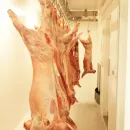 Since the beginning of this year, Russian pork exporters have increased supplies of this meat abroad to 130,300 tons. According to IMIT, Artyom Daushev, assistant to the head of Rosselkhoznadzor, spoke about this at a round table at the International Specialized Exhibition “KormVet-2023”.
This is seven thousand tons more than last year’s figure for the same period. The largest importer during this period was Belarus with 59,400 tons. The republic's leadership can be explained not only by friendly relations with our country, but also by the openness of borders and the relatively short time for supplies. Vietnam took second place with 42,700..
Read more...
Since the beginning of this year, Russian pork exporters have increased supplies of this meat abroad to 130,300 tons. According to IMIT, Artyom Daushev, assistant to the head of Rosselkhoznadzor, spoke about this at a round table at the International Specialized Exhibition “KormVet-2023”.
This is seven thousand tons more than last year’s figure for the same period. The largest importer during this period was Belarus with 59,400 tons. The republic's leadership can be explained not only by friendly relations with our country, but also by the openness of borders and the relatively short time for supplies. Vietnam took second place with 42,700..
Read more...
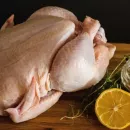 In Russia, there is an increase in prices for poultry meat and eggs, which leads to serious consequences for the industry. In this regard, the Ministry of Agriculture has prepared a bill on a temporary ban on the export of certain types of poultry and eggs from the country. If this bill is passed, exports will be limited from December this year until mid-summer 2024.
The main reason for this move was the increase in prices for poultry and eggs by 25.3% and 24%, respectively, over the past 12 months. According to the Ministry of Agriculture, this is due to a decrease in production volumes of these products in recent months and an increase in their cost due to the high exchange.
Read more...
In Russia, there is an increase in prices for poultry meat and eggs, which leads to serious consequences for the industry. In this regard, the Ministry of Agriculture has prepared a bill on a temporary ban on the export of certain types of poultry and eggs from the country. If this bill is passed, exports will be limited from December this year until mid-summer 2024.
The main reason for this move was the increase in prices for poultry and eggs by 25.3% and 24%, respectively, over the past 12 months. According to the Ministry of Agriculture, this is due to a decrease in production volumes of these products in recent months and an increase in their cost due to the high exchange.
Read more...
© Inline LLC 2015-2026. Privacy Policy | Terms of Service