
 At the end of 2022, Russia entered the top twenty world leaders in food supplies, and took first place in some categories of goods, noted Russian Prime Minister Mikhail Mishustin at a strategic session on food security.
“By the end of 2022, the Russian Federation entered the top twenty world leaders in export supplies,” said the head of the Cabinet. “For a number of products - wheat, sunflower oil, pollock - we occupy first place,” he added, emphasizing that such indicators were achieved despite external restrictions.
According to the prime minister, domestic entrepreneurs have adjusted to the new conditions and are increasing their.
Read more...
At the end of 2022, Russia entered the top twenty world leaders in food supplies, and took first place in some categories of goods, noted Russian Prime Minister Mikhail Mishustin at a strategic session on food security.
“By the end of 2022, the Russian Federation entered the top twenty world leaders in export supplies,” said the head of the Cabinet. “For a number of products - wheat, sunflower oil, pollock - we occupy first place,” he added, emphasizing that such indicators were achieved despite external restrictions.
According to the prime minister, domestic entrepreneurs have adjusted to the new conditions and are increasing their.
Read more...
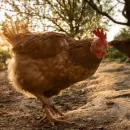 In light of the increased demand for poultry products in 2023, the Russian Ministry of Agriculture, together with the Ministry of Industry and Trade, is taking measures to encourage manufacturers and retail chains to enter into long-term contracts for the supply of chicken. This will ensure stable supply volumes and stable retail prices, which is an important factor for consumers.
One of the major problems in the poultry industry is the mismatch between supply and demand. Despite the increase in the production of poultry meat and eggs, the rise in prices for poultry products remains relevant. To solve this problem, the Ministry of Agriculture agreed on a plan to.
Read more...
In light of the increased demand for poultry products in 2023, the Russian Ministry of Agriculture, together with the Ministry of Industry and Trade, is taking measures to encourage manufacturers and retail chains to enter into long-term contracts for the supply of chicken. This will ensure stable supply volumes and stable retail prices, which is an important factor for consumers.
One of the major problems in the poultry industry is the mismatch between supply and demand. Despite the increase in the production of poultry meat and eggs, the rise in prices for poultry products remains relevant. To solve this problem, the Ministry of Agriculture agreed on a plan to.
Read more...
 Food prices in Russia continue to rise, with the most notable increases in October being the prices of eggs and chicken. According to Rosstat, since the beginning of the year, food prices have risen by 5.3%, and by the end of October 2022 - by 6.5%. However, these figures do not take into account the prices of alcoholic beverages, which also continue to rise. Let's look at the reasons for the stagnant rise in prices for eggs, chicken and other food products, and also look for possible solutions for consumers.
Eggs were one of the most notable products that rose in price in October. Compared to September, their prices increased by 13.1%. Since the beginning of the year,.
Read more...
Food prices in Russia continue to rise, with the most notable increases in October being the prices of eggs and chicken. According to Rosstat, since the beginning of the year, food prices have risen by 5.3%, and by the end of October 2022 - by 6.5%. However, these figures do not take into account the prices of alcoholic beverages, which also continue to rise. Let's look at the reasons for the stagnant rise in prices for eggs, chicken and other food products, and also look for possible solutions for consumers.
Eggs were one of the most notable products that rose in price in October. Compared to September, their prices increased by 13.1%. Since the beginning of the year,.
Read more...
 The Tsigai breed of sheep is known for its high productivity and adaptability to various climatic conditions.
The Qigai sheep breed was developed in China at the beginning of the 20th century and was named after the Ji River, which flows through Shaanxi Province, where these sheep first appeared. Their creation was aimed at producing animals capable of withstanding harsh climatic conditions and having a high level of productivity.
Now the legendary breed will receive its genetic base in Russia, thanks to the cooperation of the Crimean Research Institute of Agriculture and the North Caucasus Federal National Research Center.
“In the Russian Federation, the.
Read more...
The Tsigai breed of sheep is known for its high productivity and adaptability to various climatic conditions.
The Qigai sheep breed was developed in China at the beginning of the 20th century and was named after the Ji River, which flows through Shaanxi Province, where these sheep first appeared. Their creation was aimed at producing animals capable of withstanding harsh climatic conditions and having a high level of productivity.
Now the legendary breed will receive its genetic base in Russia, thanks to the cooperation of the Crimean Research Institute of Agriculture and the North Caucasus Federal National Research Center.
“In the Russian Federation, the.
Read more...
 The Rusagro Group, one of the leading Russian agricultural holdings, expects to begin supplying pork to China in 2024. This was announced by Alexander Tarasov, Financial Director of Rusagro Group of Companies LLC.
“Around the topic of opening exports to China, I mean specific data, a decision has been made, but there is uncertainty regarding the procedure for specific dates, and we are interacting with government agencies on this topic. I won’t give you a specific date. We very much hope that in the next “The first deliveries will begin this year,” said Alexander Tarasov.
In September, Rosselkhoznadzor reported that the General Administration of.
Read more...
The Rusagro Group, one of the leading Russian agricultural holdings, expects to begin supplying pork to China in 2024. This was announced by Alexander Tarasov, Financial Director of Rusagro Group of Companies LLC.
“Around the topic of opening exports to China, I mean specific data, a decision has been made, but there is uncertainty regarding the procedure for specific dates, and we are interacting with government agencies on this topic. I won’t give you a specific date. We very much hope that in the next “The first deliveries will begin this year,” said Alexander Tarasov.
In September, Rosselkhoznadzor reported that the General Administration of.
Read more...
 At the end of 2025, it is planned to develop national standards for organic agriculture. This follows from the plan for the implementation of the Strategy for the Development of Organic Products Production until 2030, proposed by the Ministry of Agriculture.
The plans of the agricultural department for 2024 include the creation of tools for recording “green products” and the development of a comprehensive plan for scientific research in this area. Next year it is also expected to ensure recognition of Russian certificates of conformity by countries importing organic products, as well as to help Russian organic producers enter foreign markets.
Already at the.
Read more...
At the end of 2025, it is planned to develop national standards for organic agriculture. This follows from the plan for the implementation of the Strategy for the Development of Organic Products Production until 2030, proposed by the Ministry of Agriculture.
The plans of the agricultural department for 2024 include the creation of tools for recording “green products” and the development of a comprehensive plan for scientific research in this area. Next year it is also expected to ensure recognition of Russian certificates of conformity by countries importing organic products, as well as to help Russian organic producers enter foreign markets.
Already at the.
Read more...
 According to the report “The Social and Economic Situation of Russia” by the Federal State Statistics Service (Rosstat), in September the production of canned meat increased by 23.5% year on year - to 57.1 million conventional cans.
In August–September the increase was 28.6%. Over nine months, the production of canned meat increased by 7.5% year on year.
The total production volume of red meat (pork, lamb, goat meat, horse meat, venison and cattle meat) in January–September increased by 4.6% compared to the same period last year. In September, manufacturers shipped 303 thousand tons of products in this category (+5.4% year-on-year).Production.
Read more...
According to the report “The Social and Economic Situation of Russia” by the Federal State Statistics Service (Rosstat), in September the production of canned meat increased by 23.5% year on year - to 57.1 million conventional cans.
In August–September the increase was 28.6%. Over nine months, the production of canned meat increased by 7.5% year on year.
The total production volume of red meat (pork, lamb, goat meat, horse meat, venison and cattle meat) in January–September increased by 4.6% compared to the same period last year. In September, manufacturers shipped 303 thousand tons of products in this category (+5.4% year-on-year).Production.
Read more...
 Food prices in the Russian Federation in October increased by 1.5% compared to September; eggs and chicken increased in price the most.
As Rosstat reported on Friday, since the beginning of the year, food products have become more expensive by 5.3%, in 2022 by the end of October they increased by 6.5%. These indicators do not take into account prices for alcoholic beverages, which rose by 0.3% over the month, by 2.4% since the beginning of the year, and by 1.8% in annual terms.
Thus, egg prices in October increased by 13.1% compared to September, by 18.7% since the beginning of the year, and by 23.9% in annual terms. Chicken prices rose by 3.7% last month, by 29.1%.
Read more...
Food prices in the Russian Federation in October increased by 1.5% compared to September; eggs and chicken increased in price the most.
As Rosstat reported on Friday, since the beginning of the year, food products have become more expensive by 5.3%, in 2022 by the end of October they increased by 6.5%. These indicators do not take into account prices for alcoholic beverages, which rose by 0.3% over the month, by 2.4% since the beginning of the year, and by 1.8% in annual terms.
Thus, egg prices in October increased by 13.1% compared to September, by 18.7% since the beginning of the year, and by 23.9% in annual terms. Chicken prices rose by 3.7% last month, by 29.1%.
Read more...
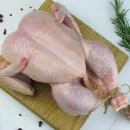 The Russian Ministry of Agriculture, together with the Ministry of Industry and Trade, will encourage producers and retail chains to enter into long-term contracts for the supply of poultry products. This was reported by the press service of the Ministry of Agriculture of the Russian Federation.
As the ministry states, in 2023, due to increased demand, prices for poultry products will increase, despite an increase in the production of poultry meat and eggs. Thus, a plan has been agreed with the main producers to further increase volumes to meet the needs of the domestic market. At the end of the year, the Ministry of Agriculture expects continued positive.
Read more...
The Russian Ministry of Agriculture, together with the Ministry of Industry and Trade, will encourage producers and retail chains to enter into long-term contracts for the supply of poultry products. This was reported by the press service of the Ministry of Agriculture of the Russian Federation.
As the ministry states, in 2023, due to increased demand, prices for poultry products will increase, despite an increase in the production of poultry meat and eggs. Thus, a plan has been agreed with the main producers to further increase volumes to meet the needs of the domestic market. At the end of the year, the Ministry of Agriculture expects continued positive.
Read more...
 By the end of this year, Russia will produce about 4.7 million tons of pork in slaughter weight, compared to 4.5 million tons last year, predicts the National Union of Pig Breeders (NSS). “The pig farming industry steadily increased in production in 2023: the figure for nine months was 6.1% in agricultural organizations and about 4.7% in general. Approximately the same increase should be expected at the end of 12 months - about 6% at enterprises and about 5% in general,” said NSS General Director Yuri Kovalev.
According to him, the increase in volumes is due to the fact that the already launched complexes continue to reach full capacity. The last preferential.
Read more...
By the end of this year, Russia will produce about 4.7 million tons of pork in slaughter weight, compared to 4.5 million tons last year, predicts the National Union of Pig Breeders (NSS). “The pig farming industry steadily increased in production in 2023: the figure for nine months was 6.1% in agricultural organizations and about 4.7% in general. Approximately the same increase should be expected at the end of 12 months - about 6% at enterprises and about 5% in general,” said NSS General Director Yuri Kovalev.
According to him, the increase in volumes is due to the fact that the already launched complexes continue to reach full capacity. The last preferential.
Read more...
© Inline LLC 2015-2026. Privacy Policy | Terms of Service